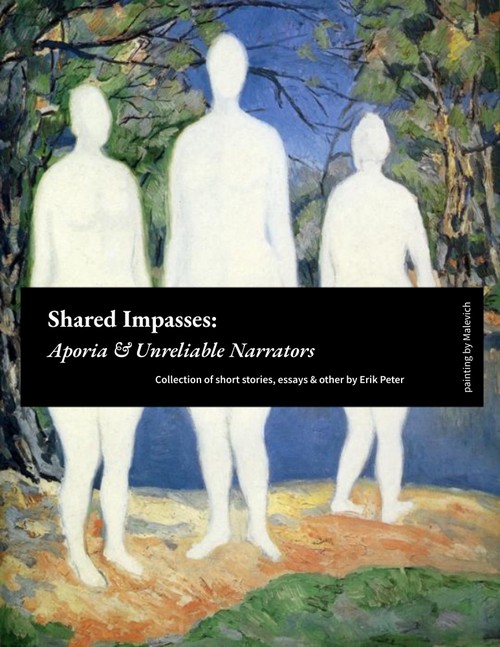
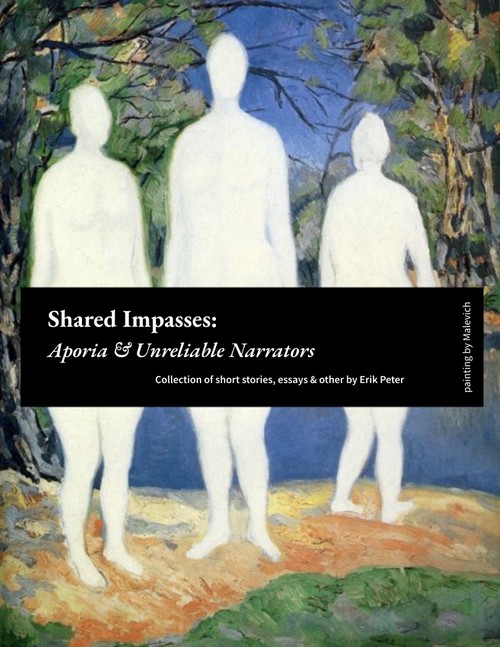
Our best stories often come from unreliable narrators, which may be absurd, demented, pathological, playful, Socratic, or confuse us for other reasons. Going back to Socrates in Plato's Phaedrus: "enormous advantages now come to us through madness once it is given as a divine gift. In fact, the prophetess at Delphi and the priestesses at Dodona do a great deal of good for Greece, both privately and publicly, when they are mad, but they accomplish little or nothing when they are sound-minded." (244 b)
Mania can be a blessing, and aporia may cause us to pause, reexamine our assumptions, and reveal something new.
Join and discuss classic authors (workshop: erik@erikpeter.me) like Gilman, Poe, Plato, Plotinus, Gogol, Akutagawa and others. How do various unreliable narrators function as tools for discovery? What is the value of aporia?